01
He drafts.
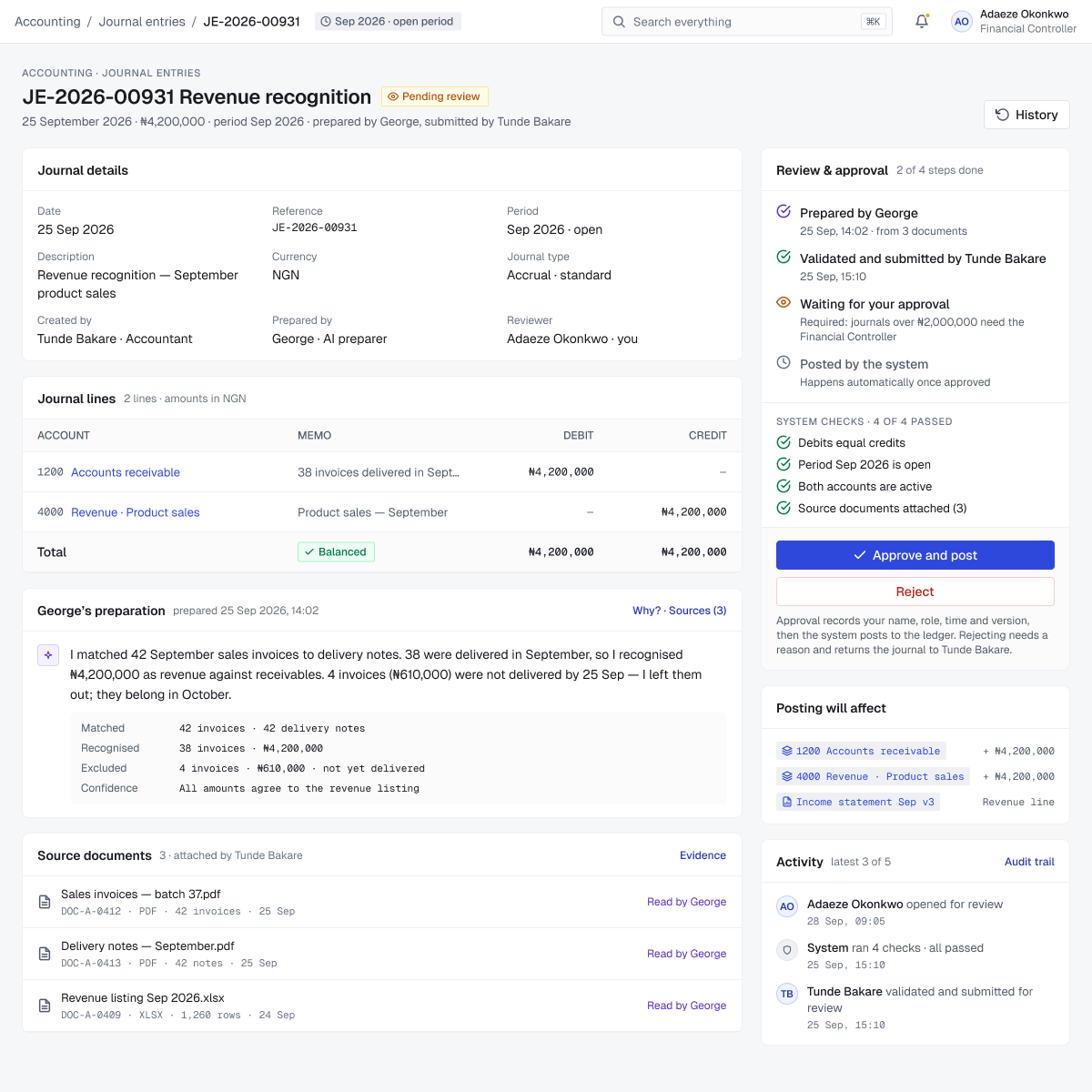
George proposes the entry from the source document, and writes down why. The draft sits on the AI ground, marked as his.
Module 01 · Accounting
George drafts the entry, shows the reasoning and the documents behind it, and stops. A named person approves it, and the ledger records which of you did what.
Inside the ledger
How a posting happens
01
George proposes the entry from the source document, and writes down why. The draft sits on the AI ground, marked as his.
02
The documents behind the entry, the accounts chosen and the period applied are all shown. Change any of it.
03
The entry enters the ledger under your name, with his draft kept beside it and the change from one to the other recorded.
Capabilities
Draft, review and post journals against the entity's chart of accounts. George prepares; a named person posts.
Keep separate sets of books for separate entities, with access following the role a person already holds.
Produce statements from the posted ledger, with each figure traceable to the entries beneath it.
Run the reports the practice needs on the period, on the entity, or across entities.
Project forward from the posted history, with the basis of each projection shown.
Every line carries its author, its timestamp and its reason. Nothing in the ledger is anonymous.
One workbench
The auditing module reads the books the accounting module keeps — no export, no re-keying, no second copy to reconcile. A firm that runs only one module never sees the other, and the separation between a firm’s own books and a client engagement is absolute either way.