

NewOne workbench for accounting and audit

Accounting and audit,in one workbench.

Ordit is the enterprise workbench for accountants and auditors, with George — an AI — working inside it. Run both modules, or switch one off. Either way the judgment stays with the person who signs.

Free 30-day trial · No card required

Revenue recognition procedure reviewed and drafted by George, awaiting sign-off
George, the AI audit partner

Two modules, one workbench

Turn on what your firm does.

Accounting and auditing are the same workbench, with the same attribution, the same audit trail and the same George underneath. A firm that only audits never sees the ledger. A firm that only keeps books never sees an engagement file. A firm that does both works across one set of data.

Module 01

Accounting

Keep the books.

Everything you need to prepare, manage and review financial information — in one place.

  • Journals and ledgers, single entity or many
  • Financial statements, prepared and reviewed
  • Reports on the schedule you set
  • Forecasts and predictions
  • Source documents attached to the entries they support

Explore accounting

Module 02

Auditing

Run the engagement.

A complete audit workflow, from planning to closure — with everything in one file.

  • The seven-stage audit workflow
  • Procedures, evidence and findings in one file
  • Cross-referenced reporting
  • Prior-year rollover and guarded close-out
  • A complete, searchable activity trail
Explore auditing

Enabled per firm by an administrator, and changeable at any time.

The workbench

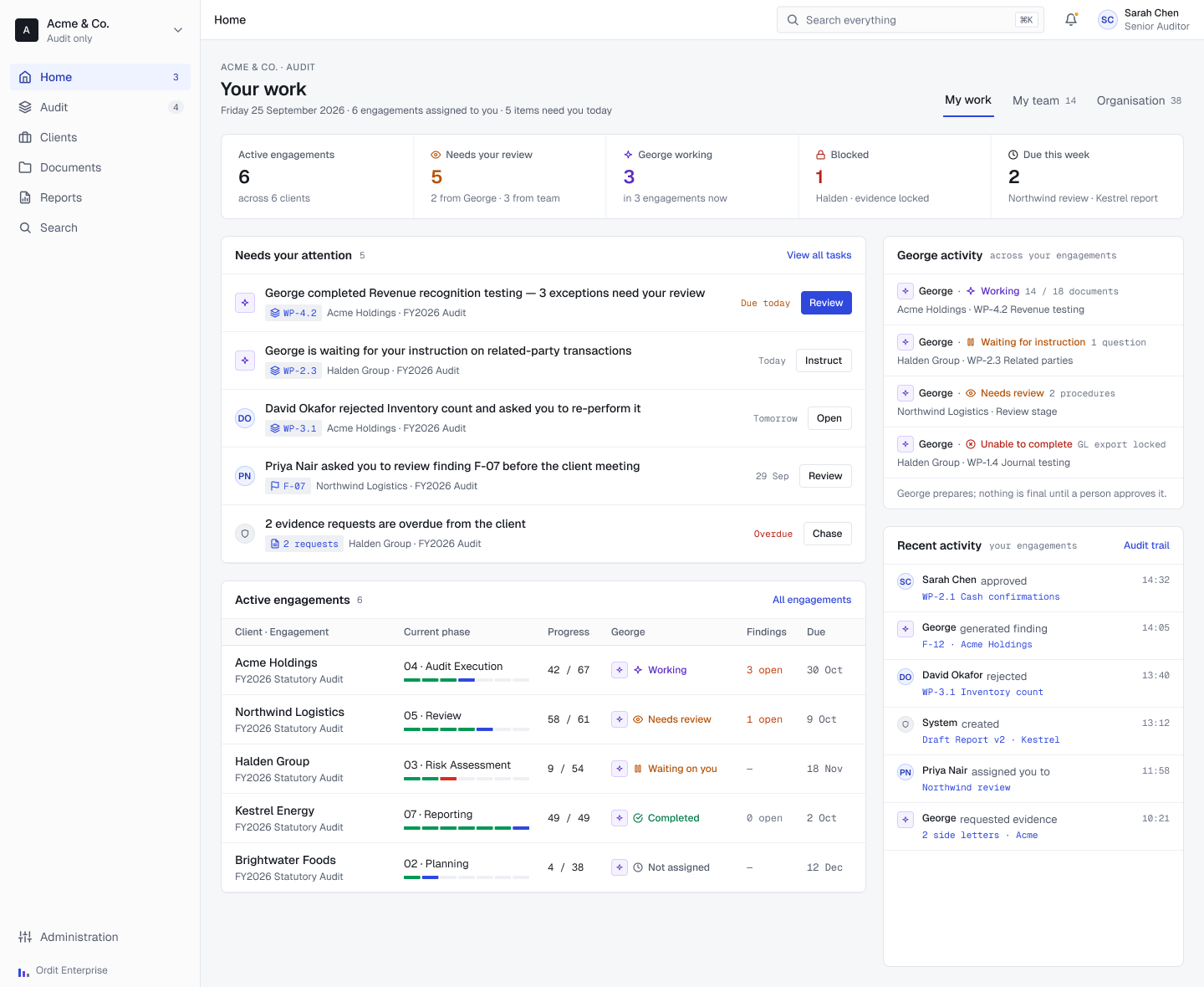
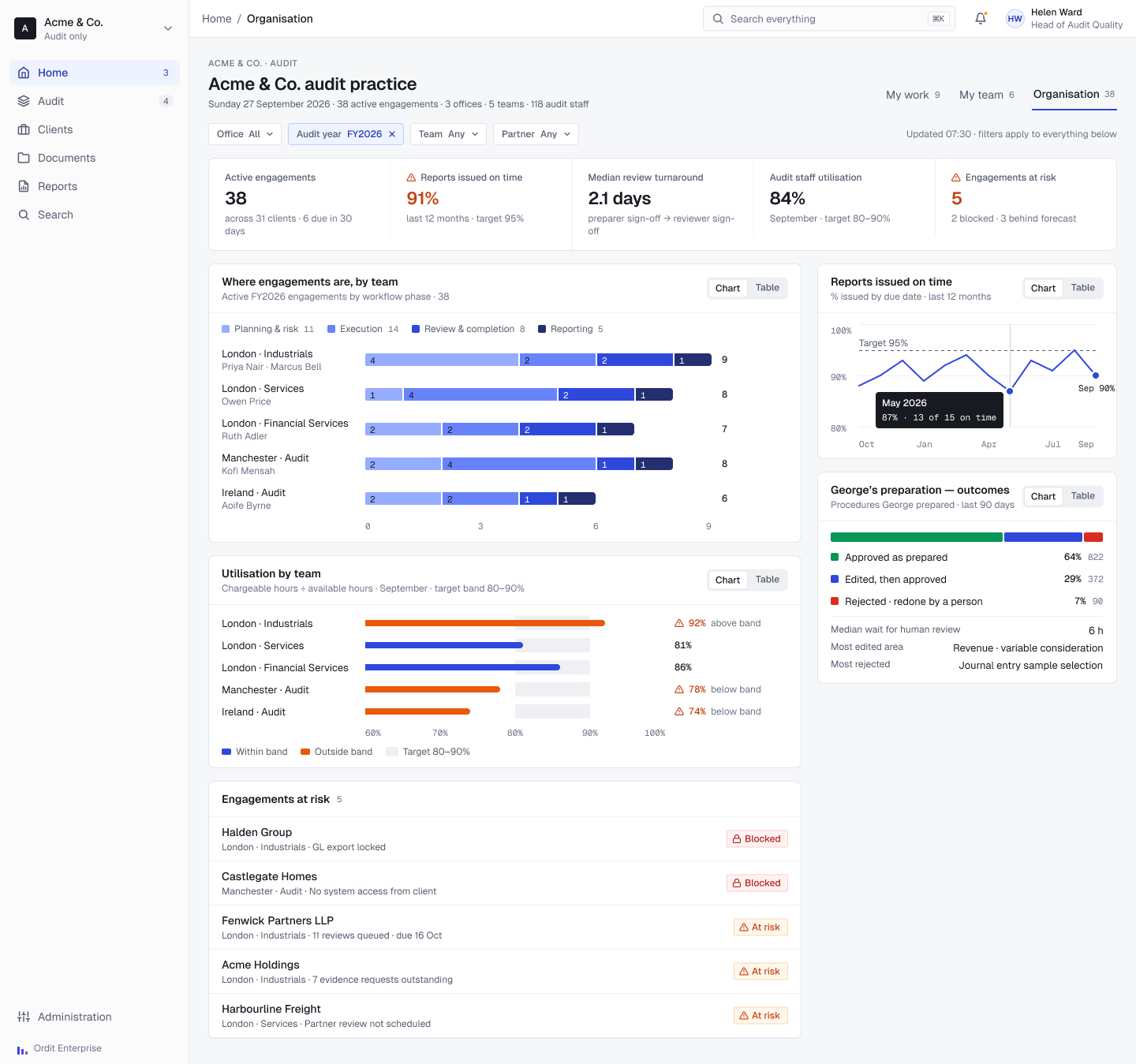
Six engagements, five things needing you, and what George did overnight.

This is the screen a firm opens in the morning. Work assigned to you, work waiting on you, and every action George took while you were away — each one attributed and reversible.

Enterprise dashboard showing engagements, work assigned to you, work awaiting you, and George's overnight actions

Ordit enterprise · 01 · Enterprise Dashboard

Who George is

A colleague with one job, and one thing he is never allowed to do.

Accounting and audit both already have a word for someone who does the work and hands it up for review. George is that person, and nothing more than that person.

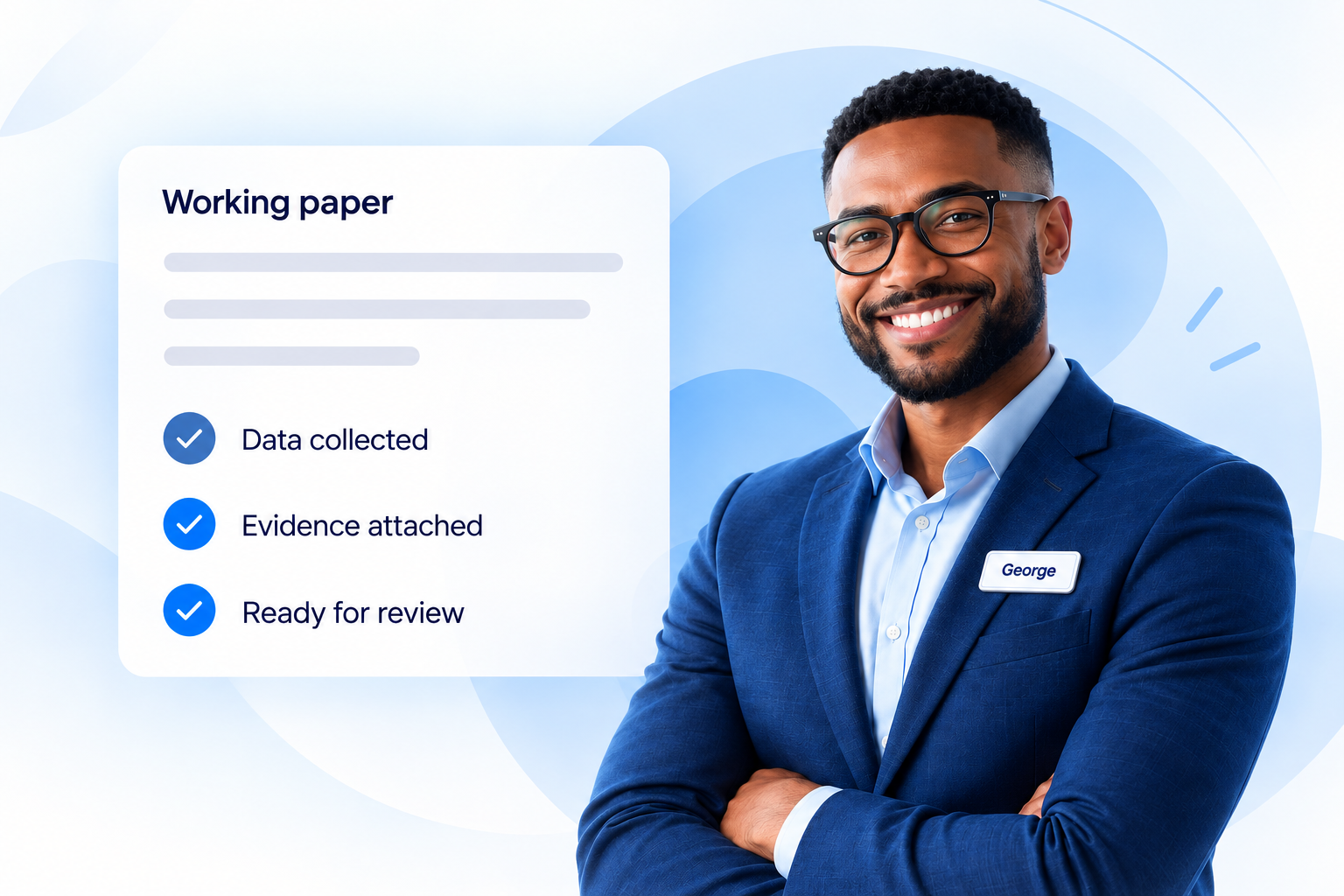
01A preparer, not a signer

A working paper checklist beside George, smiling with arms crossed

A preparer, not a signer

Both sides of the profession already have this role. A junior prepares the workpaper and a senior signs it; an accountant drafts the entry and a controller approves it. George is the one doing the preparing — tireless, consistent, and always working under review.

02He shows his working

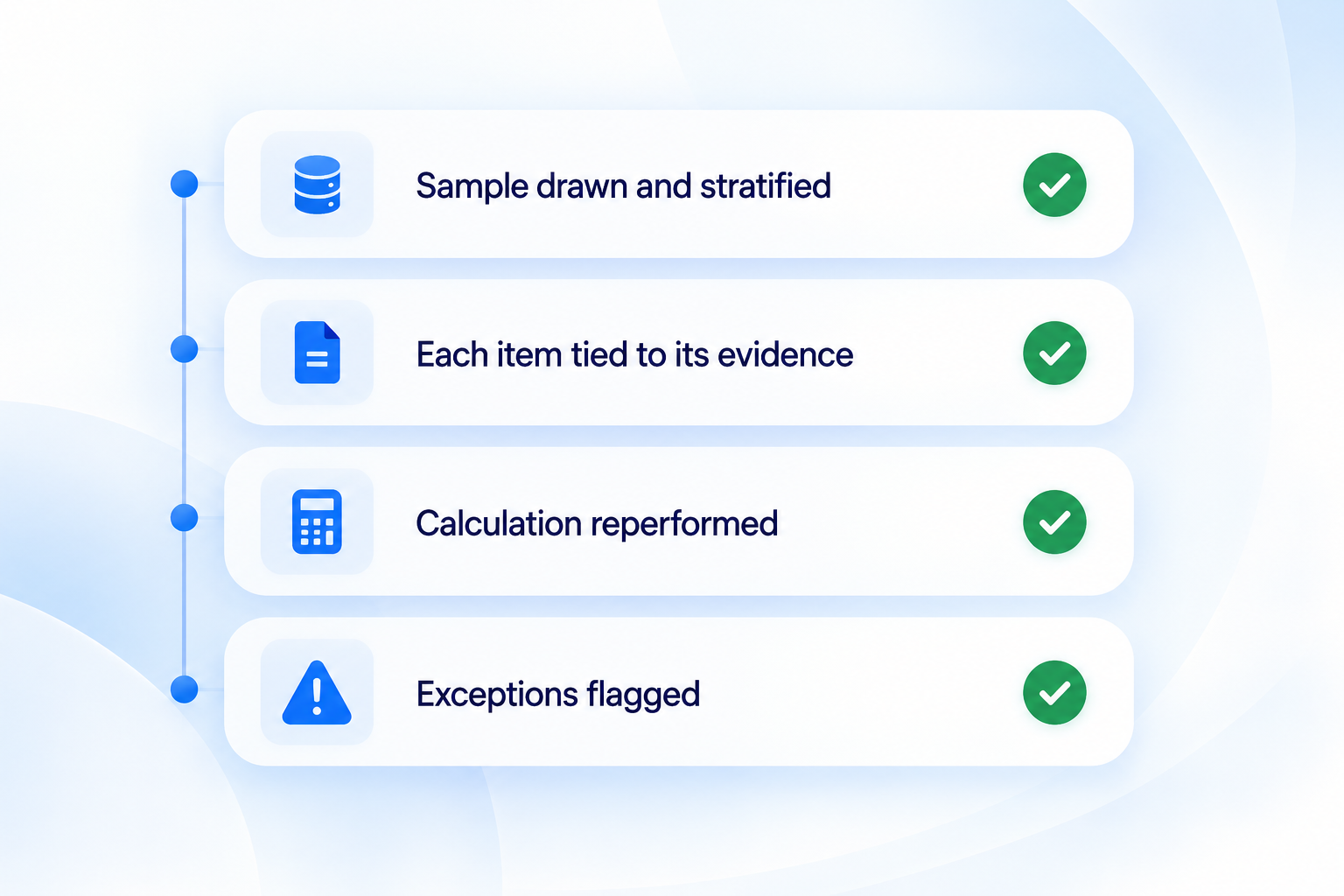
Four completed steps: sample drawn, evidence tied, calculation reperformed, exceptions flagged

He shows his working

Sampling, tie-outs, reperformance and a drafted conclusion on an engagement. Journals and a drafted statement in the books. Every step is attributed to him, timestamped, and open for you to change.

03He never signs

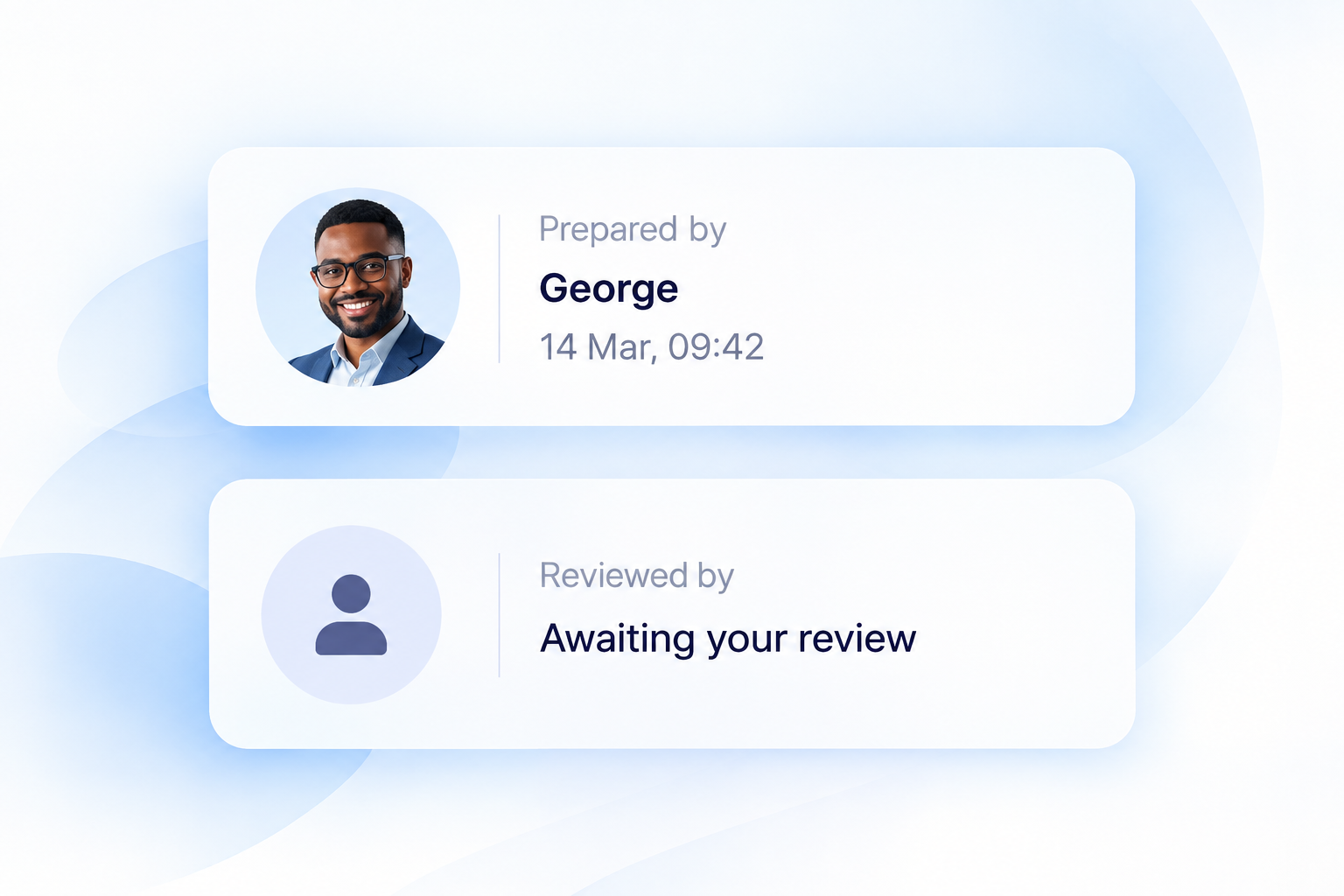
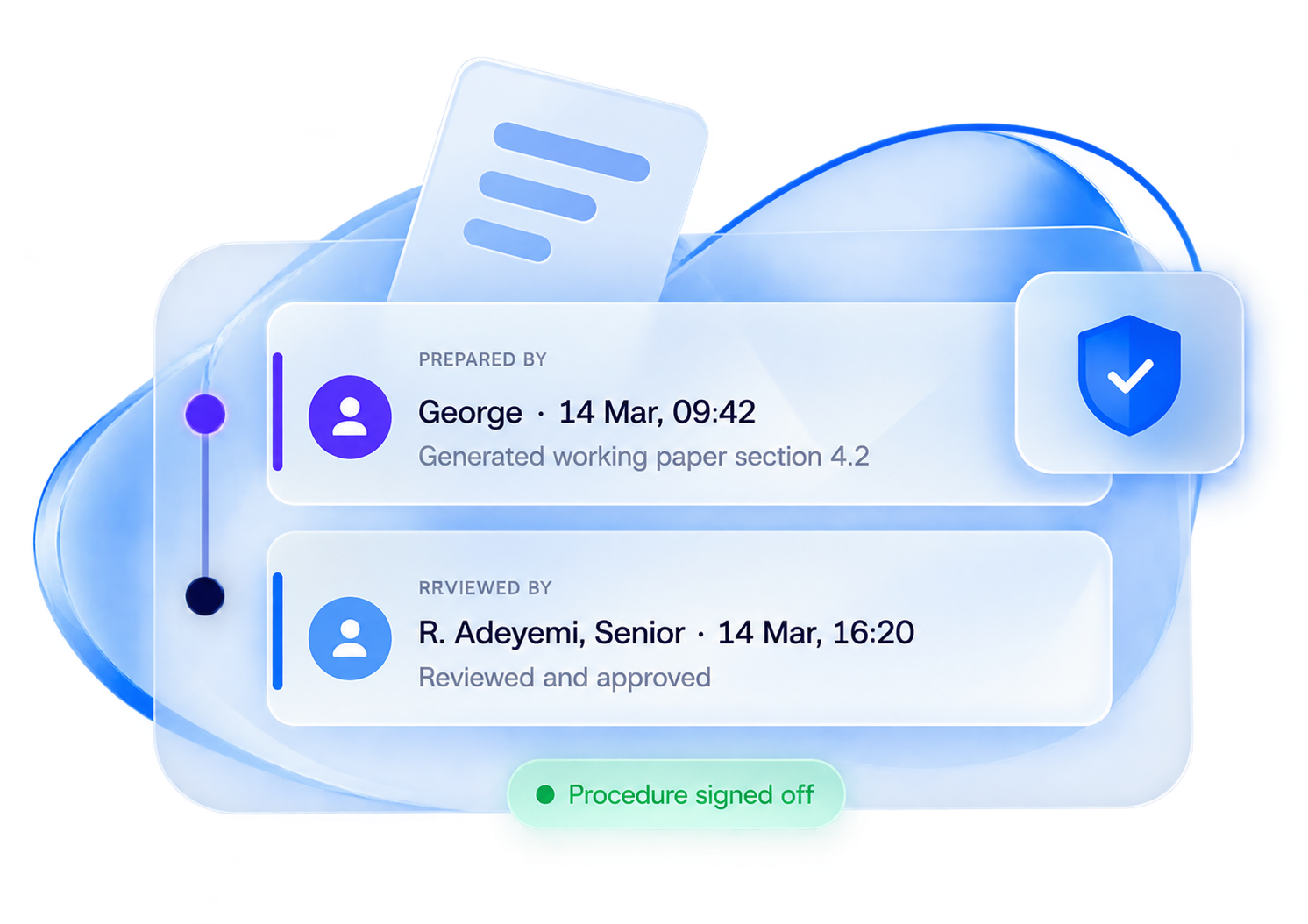
Prepared by George, reviewed by: awaiting your review

He never signs

There is one line George cannot reach. The opinion carries a human name and so does the approved entry, because a person carries the liability for both — and no amount of accuracy transfers that.

The AI inside it

George works in both.

George is embedded in the workbench, not bolted onto one module. He drafts the journal entry and he drafts the audit conclusion — and in both cases the work is authored, timestamped and waiting for a person to accept it.

In the books

Drafts entries, prepares statements and flags what looks wrong before anything is posted.

In the engagement

Selects the sample, ties every item to its evidence and drafts the conclusion.

In both

Every line carries his name and a timestamp. Nothing is final until a person accepts it.

Human in the loop, structurally

George occupies the prepared-by line.
Never the reviewed-by line.

An auditor signs the opinion and carries the liability. That cannot be delegated to software, so Ordit never asks you to. AI-authored work sits on its own tinted ground and is never mistaken for yours — and the reviewed-by line stays empty until a person fills it.

A prepared-by line filled in by George, and a reviewed-by line reading “Awaiting your review”

Defensible by construction

If it is in the file, you can prove where it came from.

Three capabilities at three different stages.

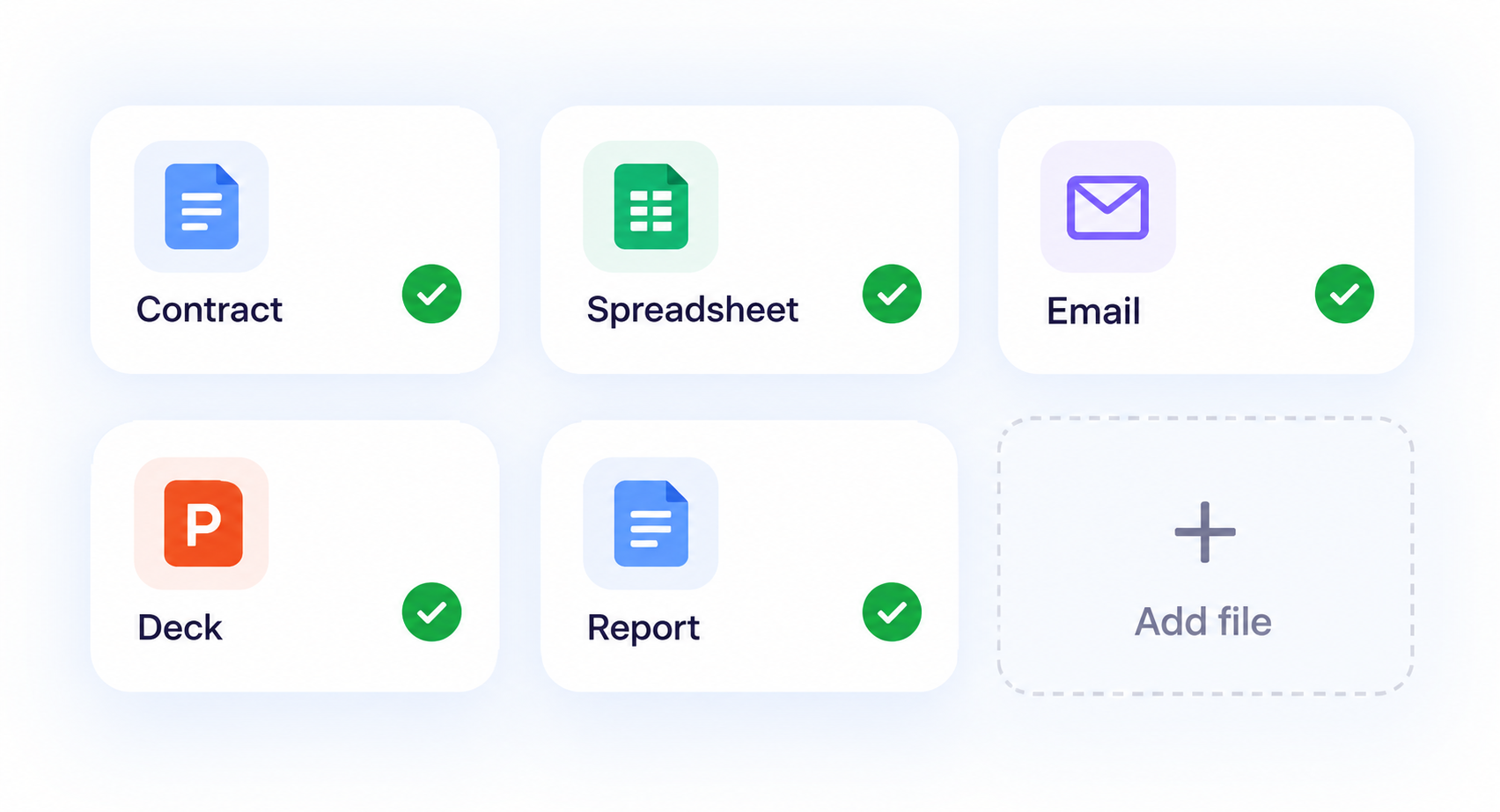
Evidence files — contract, spreadsheet, email, deck and report — each marked as received, with an add-file slot

Evidence room

Upload contracts, spreadsheets, decks and mail against an engagement or a period, and add the data fields you need.

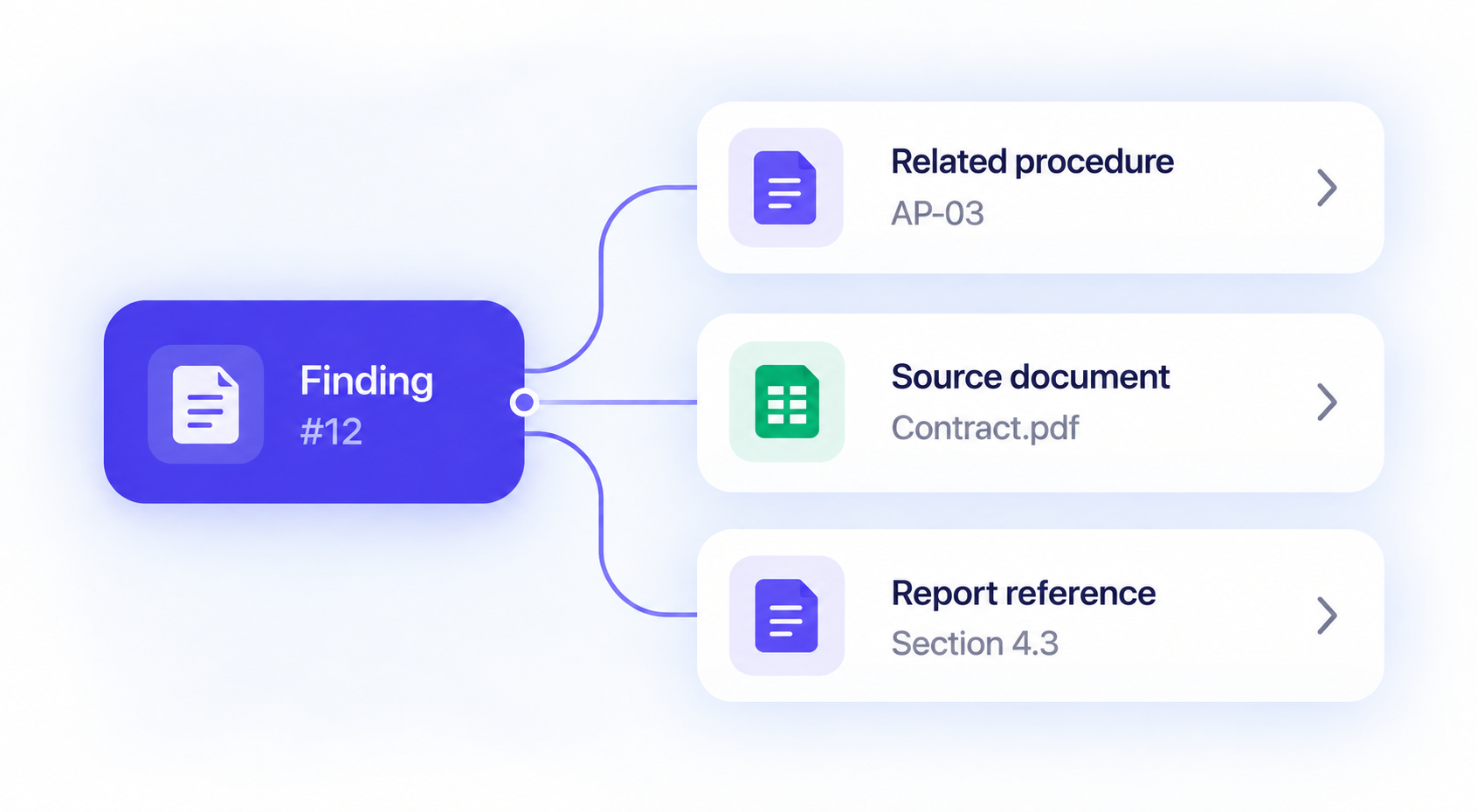
Finding #12 linked to its related procedure, source document and report reference

Cross-references

Finding #12 traces to the procedure that raised it, the contract beneath it, and the report version that carries it.

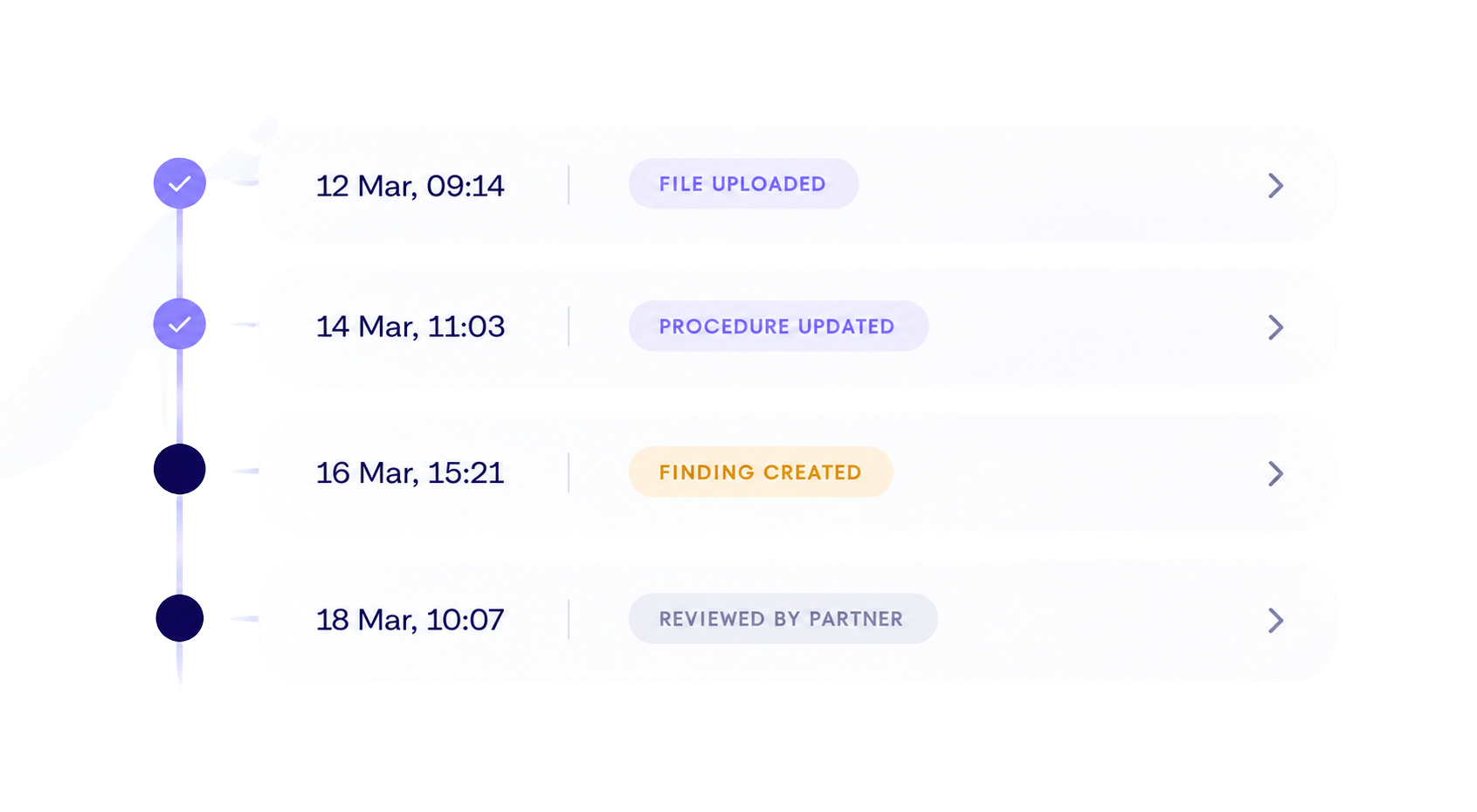
A timeline of engagement activity: file uploaded, procedure updated, finding created, reviewed by partner

Activity trail

Activity is tracked across the engagement and the ledger as the work happens.

FOR FIRMS

Built for the way audit firms actually work.

Your organisation, your roles and your separation rules — inherited from the identity you already use.

Explore for firms

Single sign-on

Sign in with Microsoft Entra ID and inherit the roles and groups people already hold.

Roles & permissions

Partner, manager, senior, reviewer, read-only. What a person can do follows their role.

Engagement separation

Every client and engagement is its own workspace. People see only what they are invited to.

Complete audit trail

Every action, change and sign-off — logged, searchable, and restricted by role.

Put George on your next engagement.

Start on your own engagement today, or bring George to the whole firm.